Sunday, 21 June 2015

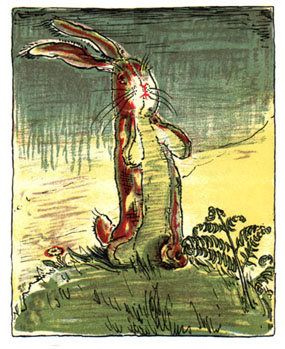
Once you are Real, you can't be ugly . . .

'The Velveteen Rabbit' or 'How Toys Become Real'

Nothing cheers you up quite like a funky new haircut. Especially when your hair has begun to drop out.

It could be a lot worse, I hasten to add. My wonder drug is much kinder than conventional chemo, so the loss is patchy rather than all over - plenty left for my Guardian Angel, the lovely Linda, to work with. Short layers have given it a bit of body, and made a nice base for my quirky new hat to sit on. So I feel altogether more confident about leaving the house. More than that, too, just the feel and touch of having it sorted was a therapy in itself.

As I've been watching my body collapse into disrepair over the last few weeks, I've found myself remembering one of my all time favourite children's stories - 'The Velveteen Rabbit' by Margery Williams. If you don't know it, it's available free on-line, along with all the beautiful original illustrations:

http://digital.library.upenn.edu/women/williams/rabbit/rabbit.html

It's the story of a toy rabbit who arrives at a little boy's home for  Christmas. As he settles into life in the nursery, he asks his new friend, the old skin horse, what it means for a toy to become "real". This is how their conversation goes:

The Skin Horse had lived longer in the nursery than any of the others. He was so old that his brown coat was bald in patches and showed the seams underneath, and most of the hairs in his tail had been pulled out to string bead necklaces. He was wise, for he had seen a long succession of mechanical toys arrive to boast and swagger, and by-and-by break their mainsprings and pass away, and he knew that they were only toys, and would never turn into anything else. For nursery magic is very strange and wonderful, and only those playthings that are old and wise and experienced like the Skin Horse understand all about it.
"What is REAL?" asked the Rabbit one day, when they were lying side by side near the nursery fender, before Nana came to tidy the room. "Does it mean having things that buzz inside you and a stick-out handle?"
"Real isn't how you are made," said the Skin Horse. "It's a thing that happens to you. When a child loves you for a long, long time, not just to play with, but REALLY loves you, then you become Real."
"Does it hurt?" asked the Rabbit.
"Sometimes," said the Skin Horse, for he was always truthful. "When you are Real you don't mind being hurt."
"Does it happen all at once, like being wound up," he asked, "or bit by bit?"
"It doesn't happen all at once," said the Skin Horse. "You become. It takes a long time. That's why it doesn't happen often to people who break easily, or have sharp edges, or who have to be carefully kept. Generally, by the time you are Real, most of your hair has been loved off, and your eyes drop out and you get loose in the joints and very shabby. But these things don't matter at all, because once you are Real you can't be ugly, except to people who don't understand."

So today, this is for everyone whose body feels as though it is failing and falling into disrepair, everyone who is becoming bald or loose in the joints or shabby. Once you are real, you can't be ugly. Except to people who don't understand.


Sunday, 7 June 2015

Holman Hunt and a Dog called Matisse


Today, I have to begin with a confession. I watch Britain's Got Talent. You might despise me for it, you might turn up your nose, you might call it a guilty pleasure but there it is. I watch it. And while I frequently wince at it, for a reasonable proportion of the minutes it occupies the screen, I thoroughly enjoy it, too.

But you would be right to say it's a guilty pleasure. I'm all too aware that from the minute the opening credits roll, what I'm watching is basically a cleverly constructed con trick, where the contestants who flock for their two minutes of fame are puppets in the hands of the editors and producers whose smoke and mirrors can distort anything and everything into fodder for the ratings war. Non - existent scandals are created; audience reactions are manipulated; tear - jerking back - stories are exploited. I can no longer tolerate it on the X factor. Nor could I find anything to enjoy in watching the Jeremy Kyle Show - where in fact the smoke and mirrors trapping vulnerable and exploitable people is not just a presentational strategy, but the whole point of the experience.

But, up until now, the balance with Britain's Got Talent has been such that it has tipped me into wanting to watch. Because between the smoke and mirrors, between the  uncomfortable moments of delusional people being allowed to expose themselves, come the two minute bursts of the most extraordinary and joyful feats of talent, courage and dedication, many of them from the most unlikely people. Like little gems of reality in a paste and paper crown, these moments have made it worth it.

 A week ago today, the show was won by a woman called Jules and her dog Matisse. She had openly employed other dogs too - we had met them in both the semi and final performances - but the bulk of the act focussed around her prize collie. Hardly surprising, given that not only was he trained brilliantly to do extraordinarily cute things, he was a dog so full of affection, good nature and evident enjoyment of life that the whole nation, it seemed, had fallen in love with him. I certainly had. And while humans' words and actions can be endlessly misrepresented, that is a lot harder to do with a dog.

But how are the mighty fallen! From the feel good of Sunday night's final, the plunge to disgrace was swift and merciless. By Friday, the Hosanna singing crowds were yelling crucify from every rooftop. Facebook was full of it; the newspapers were full of it; even Sandi Toksvig and Graham Norton were regarding the Britain's Got Talent stunt dog scandal as fair game for mockery. The revelation that had caused such outrage - that one of the sequences involved the second dog we had already met earlier in the week, but the illusion that he was, in fact Matisse - didn't even seem to me to be a problem. No CGI, no dog that hadn't been trained by Jules herself, no hiding of the fact that other dogs appeared alongside Matisse in her acts. But - for whatever reason - a decision had been made somewhere that a scandal was to be declared, and suddenly everyone was playing. The pair had been plunged from national treasures to the most hated cheats in Britain.

What's going on behind this story? Who knows. My best guess is that Jules herself has suddenly been made a victim in a very dangerous game. In retribution for the folly of being lured into reality TV land and simply doing exactly what her producers told her, she has become the victim of some pretty unpleasant bullying on a nationwide scale (when satire attacks the powerless, Sandi and Graham, it's not satire, it's bullying. Let's be clear.) Of course, I may be quite wrong about this. Jules herself may be an agent working for the BBC in a cunningly devised plot to bring Cowell's Empire down.  Or she may be an agent working for Cowell to give his Empire more publicity. Or she may be a double agent working for both.  The skulduggery that goes on in the media and entertainment industries is hardly confined to FIFA, after all, and none of us ever know what the vested interests are in how anything we receive through the media is presented to us. But as I say, my best guess is that Jules is not a hardened collaborator in a cunning plot who can take whatever is doled out to her. My best guess is that, like any victim of sudden vicious bullying, her world has collapsed. To blame that on her own stupidity for getting involved in Cowell's media circus would be acute hypocrisy from those like me who sustain that world for their own Saturday night entertainment.

But you know what? It's the dog that really gets to me. Or to be precise, it's the way we as desperate participants in an instantly connected, social media driven, got - to - have - an - opinion - on - and - someone - to - blame - for - everything - world, have corporately turned on and kicked the dog. Even when we don't even really know what the story's about. Because he is indisputably innocent, he is the perfect mirror to show us what we have become - well, what we have always been, to be fair, but which modern technological advances reveal us to be more swiftly and terribly than ever before. A community of bullies. A community which needs a scapegoat to carry its own fear and insecurity. A community where violence is projected on to the defenceless through the smoke and mirrors of comedy and cleverness. A community that has failed to move very far from the sacrifice of innocent sheep and goats in a desperate attempt to rid ourselves of our own sin and sickness.

Debbie, lighten up! I hear you say. It's only a dog on a talent show! But it isn't, actually, the dog on the talent show I'm worried about. It's what he shows us about ourselves.

Britain' Got not just Talent, but a Winter Wind of Austerity closing in ever closer. And everyone knows that means that at some point, the peasants will start revolting again the powerful. Unless they can be found a scapegoat to vent all that fear and insecurity on instead. A  nation that can turn on a dog in less than a week seems to me a nation ready to turn on . . . well, who might we turn on to blame for our current economic crisis? Who lies ready to hand for us, as the Jewish community lay ready to hand for the desperate, starving nation of post World War I Germany? Who will be promoted to us by the powerful who govern us as the real threat to our national security and prosperity? Who thinks a holocaust of the stranger, the refugee and the 'alien' faith community could never happen here? Who's failed to notice that it's already beginning?

Lamb of God, have mercy on us.


Saturday, 30 May 2015

Fear no evil

I've been thinking a lot, over these past few days, about fear.

For a long time, you see, I've prided myself on not having a lot of truck with it. Fear in general, that is, but more particularly, fear of dying. That's been especially true since I had a near brush with death in 2011 following a brain haemorrhage. I went in to the operating theatre then aware there was a very good chance that  I wouldn't wake up again, and I didn't feel in the least bit fearful. Somehow, I felt able to relax into what was happening, trust that whatever happened would be safe and good. When I woke up and discovered I was still alive, it was wonderful; but in a bizarre way, I felt quite smug about the fact that I'd been pretty laid back about the prospect of dying if this had, indeed, been 'my time'. Almost as if this was a sign of some amazing faith I could be proud of - something that made me strong and, yes, 'fearless'. To the point where, I realise, not being afraid has become a real point of pride for me.

And now, nearly 4 years later, the prospect of facing death has arrived again - apparently unrelated to the brain haemorrhage (though I'm not entirely convinced about that - but that's another story and another blog post!)  But inevitably, the experience of 2011 has inevitably been part of shaping my reactions to the cancer diagnosis. And the script  "I'm someone who's not afraid of dying" was there ready formed in my head - a comfort to cling to, but also, potentially, a point of pride which I could use to beat myself up with if the least inkling of fear began to creep into my mind. There's a fine line between not feeling fear, and condemning fear.

I guess it takes a lot to expose what's really there inside us. Part of the journey this last few weeks has been about realising how 'not feeling fear' - a gift given through experiencing the goodness and kindness of the Love I understand as God - can turn into 'condemning fear' - burdening myself with the need not to be afraid, as if God would be let down by me or disappointed in me if I was.

Which is all, of course, rather silly. Once you're able to look at it properly.

And there has been a lot of time, this time as opposed to in 2011, to look at death properly. I think when the cancer diagnosis came, I flipped into 'I've been here before' mode - "I've had the dress rehearsal, now this is it - I have all the tools for a fearless death ready at my disposal." And initially, it was relatively easy. The on-duty doctors who were landed with the job of giving me my original diagnosis were not oncologists, and the bare facts they were dealing with clearly looked like a pretty swift death sentence to them. I kind of knew what to do with that. Plan my funeral, write everyone a poem, put my affairs in order, and show everyone how brave faith in a God of Love could make you as I prepared to breathe my last. But then . . . but then, the offer of fragile hope was held out. This cancer might not - just might not - be as terminal as we had first thought. There might just be some way of holding it back, even - believe it or not - eradicating it.

Suddenly, I was not about to walk out on to the scaffold saying "It is a far, far better thing that I do now than I have ever done." Instead, I was sitting on death row, not knowing, perhaps for years, when or even whether I'm going to be executed. Cooped up indefinitely as a hostage, to a terrorist who is probably - but not certainly - going to shoot me.

Perhaps it's not so surprising that the wonderful, fragile hope of surviving should take me into a whole new level of encounter with fear.

Ad there have been other factors, too, at work to break down my pride in my own fearlessness. Something happened to my body during the radio-surgery  which took my mind into a very dark and scary place. The brain, I suppose, isn't quite like any other organ. If you fire massive amounts of radiation into it it probably isn't very surprising if you end up feeling psychotic for a bit. I didn't even know what I was scared of, but for a few days I knew that fear was the only thing I could feel, and my pride didn't stand a chance.

Fear. I think he is the real name of my uninvited guest, my terrorist intruder. Not cancer. Not death, even. Just fear.

A few weeks ago, I remember writing that I wanted to look at the terrorist; I actually didn't want him to leave before I had received whatever he had to disclose to me.

Today he has given me something precious. The knowledge that to feel fear is not to let anyone down. Least of all the God who is Love. I do not have to be unafraid.

If you're following this blog you may know that I'm trying to write my 'Jesus Novel' at the moment. There is so much to explore in terms of what fear meant in his story; what it means to say " though I walk through the valley of the shadow of death I will fear no evil", that "perfect love casts out fear." Did Jesus feel he couldn't be frightened? Was he frightened? How did he hold the balance - to be set free from fear, and yet not be afraid to be afraid?

More of all that in another post soon, perhaps.


Tuesday, 19 May 2015

The world is still good

A fair bit of news to share since the last blog post. Thank you for all your positive encouragement through what has been a difficult phase. While I was to some extent prepared for the possible physical effects of the radiosurgery, I don't think I really had any inkling of what it was likely to do to my mind and emotions to have massive amounts of radiation fired into my brain. That's been something of a roller coaster, so thanks for staying with me through it..

When I last wrote, I was about to go to for a consultation with the surgeon who had agreed to look at operating on the primary tumour in my lung. While part of me was keen to do anything to get the primary cancer removed, I had a number of questions about this. Surgery isn't usually thought to be the best course of action for cancers that have developed secondaries like the ones in my brain; Chemotherapy and Radiotherapy are generally thought to be less invasive and risky, if not necessarily quite so ruthlessly effective. However, by the time I reached the consultation, there was new evidence to factor in to the equation. The biopsy on my lung tumour had been sent off for analysis, and had turned out to be a rare genetic mutation that would respond well to one of the new cancer drugs. This was now being proposed as a better first line of treatment for my lung. If any new secondaries were forming, it would also treat them, unlike the surgical option, and it was less harsh and more effective than chemo. So  - I began the first round of treatment  last week - one simple pill to take at home daily. Meantime, I have been coming off the steroids which have been used to treat the swelling in my brain. So for the last  week it has been the war of the side effects; not quite knowing what is being caused by the cancer drug, and what is being caused by the steroid cold turkey.

I know I'm very sleepy; that my right side is struggling again with numbness and my brain is struggling to find words when I try to write. I know my hair is coming out, and my skin is coming up in a rash. I know my swollen face aches as though it's full of dental anaesthetic that's wearing off.  But as yet, no nausea, throwing up or diarrhoea - so it could be a lot worse! And I have had some treats this week to be thankful for. I spent the weekend in the kitchen baking, which was hugely satisfying.  I joined in with an Iona Big Sing  on Sunday afternoon at church, which was socially pretty tiring but very enjoyable. I had my first 'Keep Fit for Old Gits' class taught by the fabulous Linda Page which felt brilliant. I'm managing to walk the dog most days.

And best of all, now I'm not waiting for surgery, we can begin to plan for the next few weeks and months. A couple of short trips away. The concert we'd booked for my birthday. Treats not just for me but for Mike too, who so deserves a break.

The inside of my brain may well have become a scary place, but the sunlight continues to break in. All in all, the world is still good

Tuesday, 5 May 2015

Getting Real


Sheridan Smith as Lisa Lynch with Paul Nicholls as her husband Pete in BBC drama The C Word.

I wonder if anyone else watched the BBC drama “The C – Word” on Sunday evening? Mike and I both decided we wanted to in the end, and over the last 24 hours or so, I’ve found the honesty and rawness of it has been a huge help for me in unblocking what I most want to express after this last  week post - radiosurgery. So after a night of scribbling at the kitchen table, time for a new post, I think.

It’s been a week when I haven’t really wanted to communicate, or probably better, when the idea of trying to do so has just felt overwhelming. This shouldn’t be a big deal, for goodness sake; but I have felt is as such. After all, I’ve been begging everyone to communicate about what’s been happening to me since February. What right have I got suddenly to go silent and hidden on you now?

I think the first thing Lisa Lynch (aka Sheridan Smith) helped me to realise through “The C – Word” was just how difficult I have been finding it to deal with what’s happening to my body; how hard it’s becoming to be ‘seen’ at all over the last few weeks. For her, the nightmare was chemo hair loss; for me it has been the swelling, bright red steroid face; the dribbling when I eat or drink; the swollen feet and ankles; the distended, wind – filled stomach. The extra weight all over.  The fact I can’t stop ramming unnecessary food into myself. It shouldn’t matter but it does and I hate it. I hate looking at others looking at me, and wondering whether it’s OK for them, whether the changes in me are making them uncomfortable.

And I hate the effect this has on those closest to me who have to manage the space in which we live. Another thing “The C – Word” brought out so well was the devastating effect of what Lisa was going through on her husband, suddenly plunged in to the role of carer. I’m not going to write about Mike or Ellie or anyone else for that matter, it’s not for me to talk for them; but I’m deeply aware of the cost this places on them, and that adds to the sense of guilt I feel.

All that has been bubbling under the surface for weeks now, but what has been particular to this last week since the treatment? The easiest way to describe it has been an “inability to communicate”; which I suspect most people have understood as finding difficulty either framing words or typing them – and this of course is part of the truth. It’s a return to the original symptoms that alerted me to the brain tumours. But it’s actually something bigger and more fundamental that that. Put simply and bluntly? I CAN’T STAND BEING ASKED QUESTIONS.

Questions at the moment just feel too much to process. I feel responsible for giving answers I can’t work out. I feel like everything freezes up inside my head. And my emotions don’t do what I expect them to do. I feel constantly like crying.

It feels a bit like being in a tennis match – a tennis match I’ve freely chosen to play, I have to say – and then realising I can’t return anyone’s service. Everyone thinks communicating is about forming words with the mouth or with letters, but that’s the easy bit. I can just about hold my racquet; the problem is hitting anything with it. And then I feel furious with everyone’s questions, and guilt because that’s so unfair and unjustified. I’m sure it ties in with the thing about being looked at too. I’m used to being able to gently bat things back to the other person’s court. But when I can’t return the ball, it just sits at my feet, and all eyes stay on me. It starts to feel as though nothing is able to function without me. That’s clearly delusional, so it starts the cycle of guilt all over again. And those who are closest get the worst of the irritation and bad reaction when they deserve so much better.

At the root of the irritation, I know there’s a concern for everyone’s kindness and love, which is why I go on and on about it so much I guess. I feel a huge burden to be sending back constant messages of thanks and appreciation. That can get exhausting. And if I can’t do it, I feel I should be chasing Mike & co to do it. I’m always a bit paranoid like this – fed by years of ministry guilt trips too, of course – but it hits new heights when the stakes are this high; when the kindness of so many friends is so real and deep and sacrificial. I so much need you all to know that I know that, and that it’s not you, any of you, I’m really irritated with.  Just as I don’t believe you are really disappointed in me, which is what I project on to you…

Would I have been able to express anything this negative this without Sunday night’s drama? I doubt it. Thank you Lisa Lynch, and Sheridan Smith. And, of course, the BBC.

And as for how am I doing now? Good thanks. A few weeks till we know how effective brain treatment has been. A couple of days till we meet Lung specialist to talk about the primary.  Everything’s moving forward as fast as it can.


Questions? Just breathe deeply, take them slowly. Easy really.

Monday, 27 April 2015

A Giant Leap . . .


Well, here we are - time for one more blog post before what feels like a giant leap into the unknown tomorrow. All the preparations in Preston seem to have gone well, and on Tuesday it's Stereotactic Radiosurgery day - 45 minutes of carefully focussed high intensity beams of radiation on the tumours in my brain. Will they be obliterated, shrunk a bit, or not really helped much at all? Who knows. Will I feel sick and exhausted afterwards, or back to normal in no time? Who knows that either. So it's hard to plan for next week at all, or to know what lies beyond it. I know the last few days I've been progressively more tired, and just recently there's been a little recurrence of some of the original language muddling and right arm deadness . .  so the steroids which have served me so well for symptom relief (whilst turning me into an even more moon faced than usual Telly Tubby) are beginning to struggle to keep the tide at bay. So - here's to Tuesday; the finishing line - or the starting line - or both.

Just in case it proves to be a while before I can write again, I want to tell you something about what I've been working on for ..... well, for a couple of years, now; but in a focussed and more intensive way since last September. Some of you know I'm writing what I think I can best call a novel, although novel isn't quite the right term for it, really. It's something I've wanted to do ever since reading Wolf Hall and being totally captivated by it. If Hilary Mantel can make us live and breathe and care passionately about Thomas Cromwell, I figured, would it be possible to do the same for Jesus? To write his story in such a way that it's authentic the accounts we have, and yet fired and fleshed out by the imagination? Could such a book make Jesus accessible, capture the reader's heart and mind; make her see what I see in him, what has drawn me to shape the whole of my life around him? Various people have tried this before, of course, so it's not a new idea, but I haven't yet felt really grabbed by any attempts that I've read. They can so often feel a bit "men in tea-towels"; locked in a past world, not really letting the imagination go enough to lift the characters off the page.

This idea stayed no more than that, an idea, for a long time, and then I found myself doodling a prologue, and an introduction, and before long,  I couldn't stop.  And last September, it felt as if my week had found a perfect balance and ordering - 3 days working at the wonderful Susan's Pie Shop earning a bit of cash, and two days disciplined (well, disciplined-ish) days at the library with Yeshua.  By the end of January, I reckoned I was about a third of the way through what I think the final project is likely to be. 

All this, of course, has been on hold for the past couple of months. But my excitement for it was awakened again last week by an encounter with Professor Kate Cooper, historian and author of Band of Angels - "the surprising story of early Christianity from the woman's point of view."

Debbie with Anjum and Kate


It was an event organised by my dear friend Anjum Anwar, with whom Kate was in conversation; a Muslim woman and a Christian one sharing their excitement about the way in which women have always shaped and transmitted the stories that keep their faith traditions alive, and continue to do so now. I travelled home from Blackburn with my head buzzing. Realising afresh just how much I'd love the time to finish my telling of this story which has so captivated my life. 


Why does it matter to me so much? Because this story, apart from being the best story I know, is also about what is truth and what is love and what is the point of being human, and those things matter to me more than life itself - certainly more than biological life. Having life threatening cancer doesn't make me cry. But listening to a young girl on the radio yesterday morning saying that because she was a Christian, she would be voting for UKIP as the only party "standing up  for Christian values"? That made me cry. Having life threatening cancer doesn't make me angry. But hearing  people in middle class, self - protective church ghettos talking of themselves as "proper Christians" because their children still go to church? That makes me want to smash things. I'm not sure I can even handle the term 'Christian' any more - like it's a badge of merit, something that draws a ring of inclusion round the clever smug few and leaves the rest of humanity in a different place. Jesus would never have merited the label Christian. And I'd rather not have anyone think I merit it either. 

Because what I want is what he had; where I want to be is on the way he walked. For twenty years I tried to function as a priest, and then it dawned on me that he - the one true priest - was never a priest. Never an insider. Never recognised. So I resigned my license. Because I want to be where he is.

So this novel, if its a novel, is also profoundly theological, profoundly about the nature of truth and reality and what the word 'God' might mean if it didn't mean one little figure slugging it out in an absurd Divine Pantheon, trying to prove he's better than everyone else in there. Which is the caricature we so often seem to present of Jesus, and of the prophets of other ways and traditions too. 

One of my favourite writers, Richard Rohr, gets this so beautifully . . .if I could sum up in a nutshell the Jesus whose story I long to tell, it would be something like this, where he describes St Paul's encounter with truth though Jesus:

  Paul never uses the word "Almighty" for the Divine, despite its common usage to this day. His image of God was of someone crucified outside the city walls in the way a slave might be killed, and not of a God appearing on heavenly clouds. Christ was not the strong, powerful, military Messiah that the Jews had been waiting for throughout their history of being enslaved, oppressed, occupied, and colonized.. . . rather, God consistently chose the weak to confound the strong.

Paul's view of himself, of God, and of all others was turned on its head. He had to utterly redefine how divine power worked and how humans changed. All he knew for sure at the beginning was that it was not what anyone expected. 

It takes a long time to move from power to weakness, from glib certitude to vulnerability, from meritocracy to pure grace. In Paul's letters, he consistently idealizes not power but powerlessness, not strength but weakness. It's as if he's saying, "I glory when I fail and suffer because now I get to be like Jesus--the naked loser God."  

The revelation of the death and resurrection of Jesus forever redefines what success and winning mean--and it is not what any of us want or expect. On the cross, God is revealed as vulnerability itself (the Latin word vulnera means woundedness). We ourselves grow through vulnerability and not through any need to posture, pose, or present.  Now only the humble will ever find God.

Until you understand that truth on some level, even if it takes until the later years of your life, you can't fully understand the Gospel. And I don't think most people do, not even most Christians. The egoic or unconverted self reads everything in terms of its own ascent, various attempts at spiritual achievement, the attaining of merits and rewards, climbing upward, performing for God, concocting my own worthiness game, and then pretending I am succeeding at it. It is all so futile and so unnecessary. Despite the immense freedom and permission of the Gospel, most of Christian history has been trying to run up the escalator that Jesus (and Reality) has aimed downward. This has produced many frustrated people and frustrating clergy. Yet it is so natural and even easy to go down the downward escalator.

Adapted from Great Themes of Paul: Life as Participation, Richard Rohr. 

So much more I want to say - so much more I want to write. But even more I want to live, this side of dying and beyond.

And here I am, weeks after barely daring to ask that my little lantern of Fragile Hope might last the night, watching it burning away steadily. 

It's just before 6am. And it's a beautiful day. The Sure Hope of Dawn is flooding through the window. 

Friday, 17 April 2015

Joining the Dots

When something big happens in your life, do you ever have the experience of suddenly seeming to hear it mentioned endlessly from the most unexpected of sources? I find it happens to me a lot. Sometimes, of course, I'm sure it's simply that your ear becomes attuned to hearing what it would in other circumstances simply have screened out. Sometimes, however, it's hard not to have the sense of being communicated with directly. What were the chances, for instance, of my turning on the radio in the kitchen for a bit of background noise the other day, and finding myself listening to a programme that described in detail Stereotactic Radiosurgery, the very radical cutting edge treatment I'm due to be having to treat the tumours on my brain in less than a fortnight's time?

The programme was called "Is cancer money well spent? " and it's well worth a listen - though you might have to be quick as I don't know how long it'll be available on i-player. The link is

 http://www.bbc.co.uk/programmes/b05pnsr8

As well as learning more about the 'cyberknife' treatment as it's sometimes called, I learned, as a result of this programme, that I am far more privileged to be able to access it than I had previously realised. I wasn't aware that - while it could clearly be used to radically treat a number of types of cancer - its use is currently largely limited, in this country, to the treatment of lung and brain tumours (the very ones I have) due to the limitations of funding. I also learned that to be half an hour's drive from Preston puts me in the very  privileged position of being in a part of the country where it is easily accessible. I learned that consultants frequently put in requests to have this treatment funded in the full heartbreaking knowledge that those requests will be turned down. I listened to the account of a mother in her 40s who could have been helped by this treatment being unable to access it, leaving her widower now caring alone for their daughter with special needs. I learned how in France, people are routinely treated  for all sorts of cancers with Stereotactic Radiosurgery with a remarkable rate of success. And I was invited to share the dilemma that those who hold the NHS's purse strings have to live with daily; just how do you allocate limited resources in the fairest and most effective way? When to say 'yes' to one person's treatment is always going to mean saying 'no' to someone else's? When the cost of drugs which can extend someone's life by a few months has to be constantly weighed against the provision of treatment that could save life or even prevent illness in the first place?

Over the last couple of months, I'm aware that a number of friends and family have expressed concern at what seemed like a lack of speed in getting treatment actioned for me. I've been touched by and grateful for that concern - especially as there was, a few weeks ago, a sense that we'd had a few administrative blips that might have unnecessarily held things up, and that is definitely something to be assertively zero tolerance about! But I've also found myself wanting to challenge what so many of us fall into especially where the NHS is concerned - a sense of absolute entitlement; the sense that if anything happens to us or to a loved one, it's our unassailable British right to expect the very best treatment money can buy and expect it without delay. Here I am, just 2 months after diagnosis, preparing for the very best treatment that could possibly be offered to me in less than a fortnight from now. How can we be anything less than overwhelmingly grateful for that?

Every day the news bombards us with stories of the funding crisis in the NHS, but when something happens to us or our loved ones we find it near impossible to join the dots; to realise that a funding crisis might just mean what it says - not enough money to do everything we'd like to do for everyone on the schedule we'd like to do it. And nor are we joining the dots about what it means to be victim of our own success - a nation where the exponential growth in average life expectancy means we're all going to become much more expensive to maintain and care for through our old age. The money's running out, people! A week back in February on Lancaster 's Acute Medical Unit was an education I won't forget. Watching more elderly, distressed people, many with dementia, arriving to be assessed than there were staff available to assess them. Than there were staff to keep them safe from climbing out of bed, falling, hurting themselves. Than there were staff to feed them, let alone listen to and reassure them. And that was only the dementia crisis.

So to everyone who's tempted to frustration by what may look like a lack of urgency when it comes to the care of ourselves or our loved ones, I want to say "Join the dots". We're in a crisis. This is not the NHS's crisis, it's our crisis, and it's about what we decide as a society are our priorities, and what we decide as individuals our own share of responsibility for our national priorities are. In the run up to an election,if our decision about how to vote is motivated principally by self interest as to our own tax bills, then the NHS will not be there for us when we need it. And if we think casting our vote for one party or another is where our responsibility begins and ends, then we're deluding ourselves. There is no entitlement to the best of everything just when we need it any more. If we want an NHS, then we have to take responsibility; make ourselves informed; campaign; fund raise; protest unfair changes; support the rights of NHS staff; care. Because once we lose the NHS, we'll never get it back.

Once you start dot joining, of course, there's no end to the sobering places it can take you. The excellent care I am being offered comes at a price, and that funding will not be there for someone else. I'm not beating myself up about that, but it's important I'm aware of it, and that it deepens my gratitude and my determination not to waste a second of the precious life I have, however long or short it turns out to be. Or again, the compassion we feel for the victims of tragedy we relate to easily comes at a price of dehumanising others we deem less important. It's beautiful to read about the Memorial Service for the victims of the Alps plane crash today in Cologne Cathedral, with candles and wooden angels commemorating each precious victim by name. It's chilling to have to  search the BBC website for any references to the 400 - odd, many of them children,  who drowned in the Mediterranean earlier this week as they attempted to flee from lives whose horrors we can barely imagine. There names lie, forgotten, with their bodies, on the bed of the ocean.  Is any of them less precious?  Any less worthy of a candle or an angel?

It's time we all began to join the dots.